



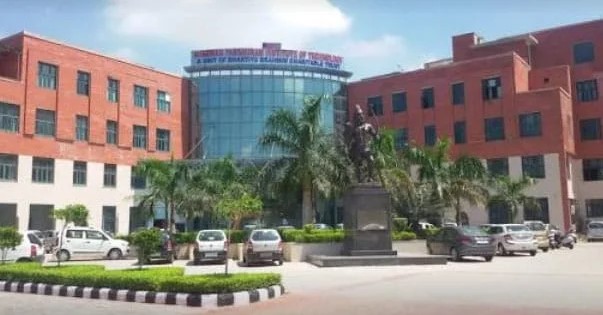
Bhagwan Parshuram Institute of Technology (BPIT), Rohini, New Delhi, India
Bhagwan Parshuram Institute of Technology has evolved into an institution where academic rigour is complemented by a growing focus on meaningful research and innovation. The institute currently has a core group of faculty members with doctoral qualifications 85, along with several others pursuing PhD 28 in areas such as artificial intelligence, data science, and computing systems.
In terms of research output, the institute has published 1,049 papers/chapters over the last five years in peer-reviewed journals (SCI/Scopus-indexed) and conferences (Scopus-indexed), including venues indexed by IEEE, Scopus, and Web of Science. Faculty members have also been involved in externally funded and institution-supported projects, with a growing number of interdisciplinary proposals in areas such as AI applications, smart systems, and sustainable technologies.
The institute maintains 34 dedicated laboratories for computing and electronics, including advanced computing labs, networking labs, and project-based innovation spaces. These labs are regularly used for student projects, faculty research, workshops, and hands-on training programs.
A key enabler in this ecosystem is the Institute Innovation Cell (IIC). Over the last few academic cycles, the IIC has organized 84 activities, including hackathons, ideation drives, and problem-solving challenges. These initiatives have led to multiple student prototypes and early-stage project ideas, some of which have been advanced to competitions and incubation support.
The institute’s academic and research activities are gradually being aligned with the United Nations Sustainable Development Goals framework. This is evident in ongoing work and student projects that address:
- Quality Education (SDG 4), through digital learning tools and open-source initiatives
- Industry, Innovation, and Infrastructure (SDG 9), through applied research and prototype development
- Sustainable Cities and Communities (SDG 11), particularly via IoT-based solutions
- Climate Action (SDG 13), with increasing focus on energy-efficient and green computing practices.
Although still in development, this alignment is guiding research toward socially relevant outcomes. The institute’s current endeavours focus on several key domains, as evidenced by faculty publications and student projects:
- Artificial Intelligence and Machine Learning
- Evolutionary and Nature-Inspired Computing
- Data Analytics and Intelligent Systems
- Internet of Things and Smart Applications
- Cybersecurity and Secure Computing
- Sustainable and Green Technologies
- Cloud and Distributed Computing
From an infrastructure perspective, the institute provides access to well-maintained computing systems, licensed and open-source software tools, and networking infrastructure required for experimentation and development. These facilities are used not only for curriculum delivery but also for research, student projects, and short-term training programs. In addition, collaborative spaces and IIC-led activities enable students and faculty to move beyond coursework and explore implementation-oriented ideas, which is increasingly important for conferences with an applied research focus.